


Why study Systems and Control?
Modern technologies rely on intelligent systems that can sense, decide, and act autonomously. From robots and semiconductor manufacturing equipment to medical devices, smart energy systems, and autonomous vehicles, Systems and Control provides the mathematical and engineering foundations that make these technologies possible.
In the two-year MSc in Systems and Control at TU/e, you learn how to model, analyze, optimize, and control complex dynamical systems. By combining control engineering, applied mathematics, optimization, computing, and AI-based methods, you develop the expertise needed to create intelligent solutions for some of society's most advanced technological challenges.
As a joint programme of Mechanical Engineering and Electrical Engineering, Systems and Control offers a uniquely multidisciplinary perspective on complex technological systems. Located in Brainport Eindhoven, you will study at the heart of one of Europe's leading high-tech ecosystems.
Three unique strengths
The Systems and Control Master's at TU/e offers distinct advantages:
- Engineer the intelligence behind high-tech systems:
Learn how to design the algorithms and control strategies that enable complex systems to operate safely, efficiently, and autonomously. Applications range from semiconductor equipment and robotics to medical technologies and smart energy networks. - Combine mathematics, engineering, and AI:
Systems and Control brings together control engineering, optimization, dynamical systems, computing, and data-driven methods. This multidisciplinary combination equips you with a unique toolkit for solving complex technological challenges. - Innovate in Europe's premier high-tech ecosystem:
Study in Brainport Eindhoven and collaborate with leading companies and research institutes developing the next generation of high-tech systems. Through hands-on projects, internships, and graduation projects, you will apply your knowledge to real-world innovation challenges.
Connection with the semiconductor industry
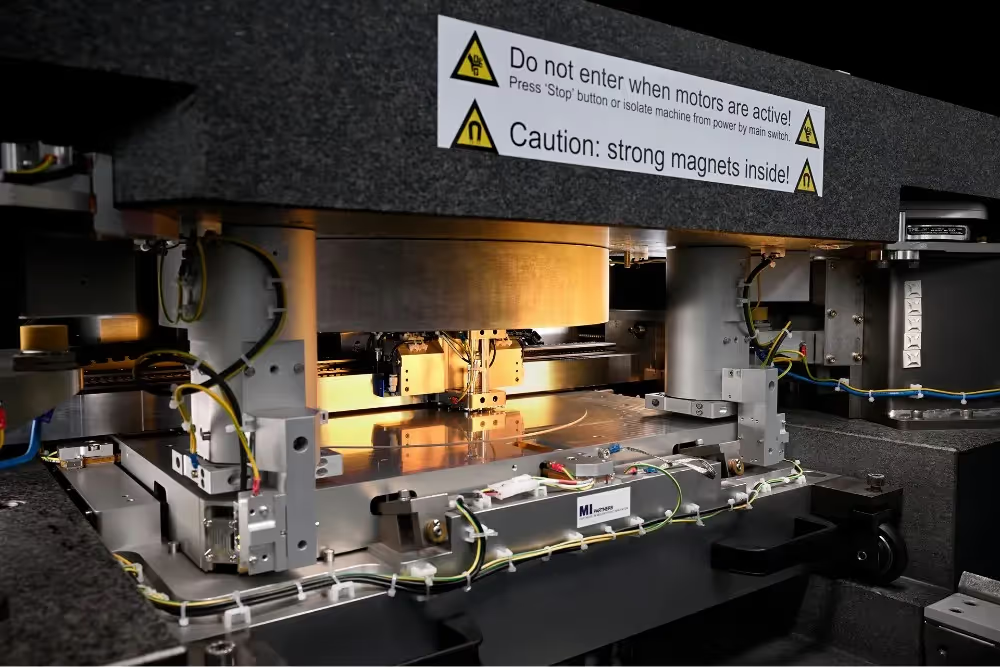
Semiconductor manufacturing relies on some of the most precise and sophisticated machines ever built. The performance of lithography systems, wafer handling equipment, inspection systems, and advanced manufacturing technologies depends on accurate modelling, estimation, optimization, and control.
Systems and Control engineers develop the algorithms that enable these machines to achieve nanometre-level precision, compensate for disturbances, and operate reliably in highly demanding environments. As the semiconductor industry continues to push technological limits, expertise in systems modelling, automation, control, and intelligent decision-making is becoming increasingly important.
Studying in Brainport Eindhoven places you close to one of the world's leading semiconductor ecosystems, where Systems and Control expertise plays a critical role in technological innovation.
Programme structure
The programme offers a strong foundation in systems modelling, dynamics, optimization, estimation, and control while providing significant freedom to tailor your studies to your interests. Students choose courses and projects in consultation with a mentor and can build expertise in areas such as robotics, autonomous systems, advanced control, optimization, modern energy systems, and high-tech control applications.
The curriculum includes:
• Core courses in systems and control theory
• Specialization courses aligned with your interests
• Electives that allow you to broaden or deepen your expertise
• A hands-on Systems and Control Integration Project
• An industry or research internship
• A major graduation project addressing a real-world challenge
This flexible structure enables you to develop both deep analytical expertise and practical engineering skills.
Career perspectives
Graduates of Systems and Control are highly sought after in industries where intelligent systems, automation, and advanced technology play a central role. Career opportunities include positions such as:
• Control Systems Engineer
• Systems Engineer
• Robotics Engineer
• Optimization Engineer
• Automation Specialist
• Algorithm Developer
• R&D Engineer
• System Architect
Graduates contribute to innovations in semiconductors, robotics, healthcare technologies, autonomous systems, energy systems, aerospace, and advanced manufacturing. Many also continue into doctoral research, developing the next generation of systems and control technologies.


